Imagine this: a critical bug appears in your live Flutter app. Users are affected, something is broken, and you’re under pressure to fix it immediately.
Can you use Shorebird to push a quick OTA patch and save the day?
Absolutely.
But should your release process assume that OTA will be used to fix critical bugs?
Absolutely not.
Shorebird is a tool for support and flexibility – not a replacement for a proper release process.
By design, critical fixes should always go through standard QA, build, and app store submission. This ensures safety, reliability, and consistency for all users.
The Trap: “We can always patch it later”
Once you start using OTA, it’s easy to shift your mindset.
- You fix a small issue without a release.
- Then another one.
- Then a slightly bigger one.
At some point, your process quietly changes from:
“We release stable, well-tested versions”
to
“We can fix it later with OTA.”
That’s where the risk begins.
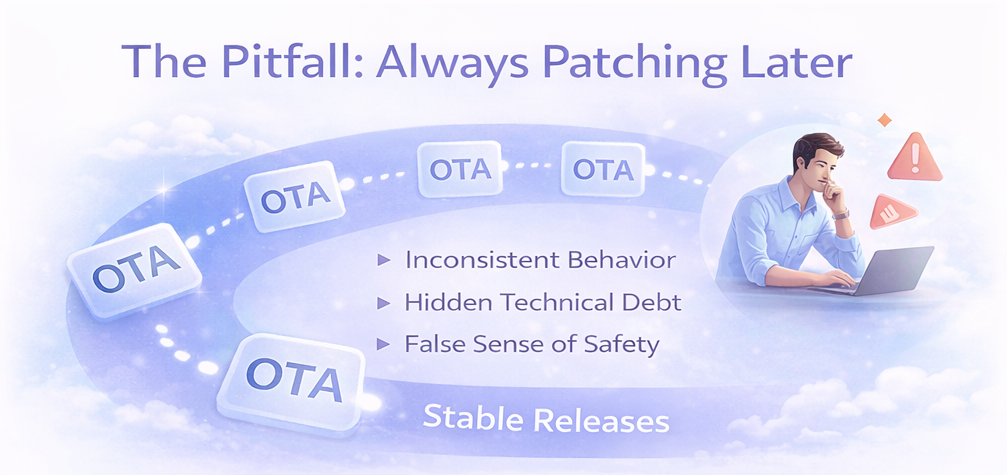
Relying too much on OTA can lead to:
- Inconsistent app behavior across users
- Reduced confidence in releases
- Hidden technical debt in production
- A false sense of safety around quality
Shorebird doesn’t create these problems – but it can amplify them if used without discipline.
How Shorebird Fits In
Shorebird lets you update the Dart layer of your Flutter app after it’s already published, without republishing the entire app.
In practice, it’s useful for situations like these:
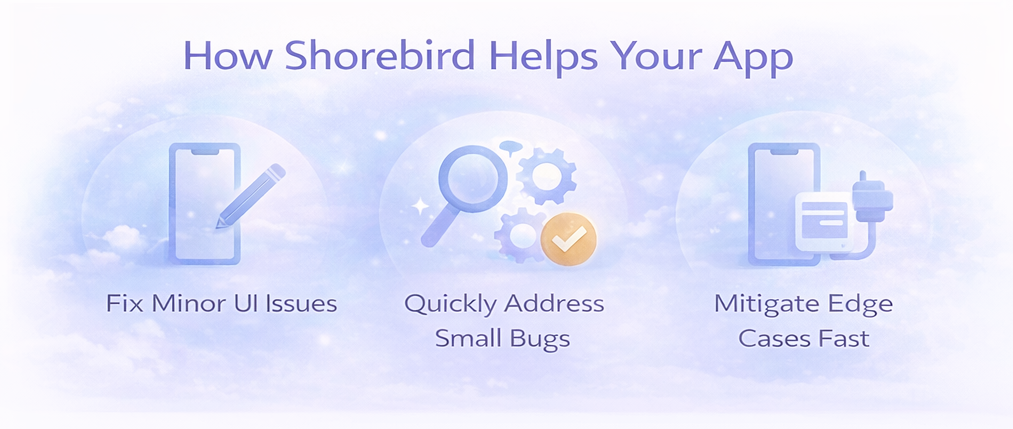
- Fixing small UI issues like spacing, labels, or text adjustments without waiting for the next full release
- Improving the app after release when monitoring tools reveal minor issues
- Temporarily mitigating unusual situations such as external service outages while preparing a proper release
Shorebird Should not Replace Standard Releases
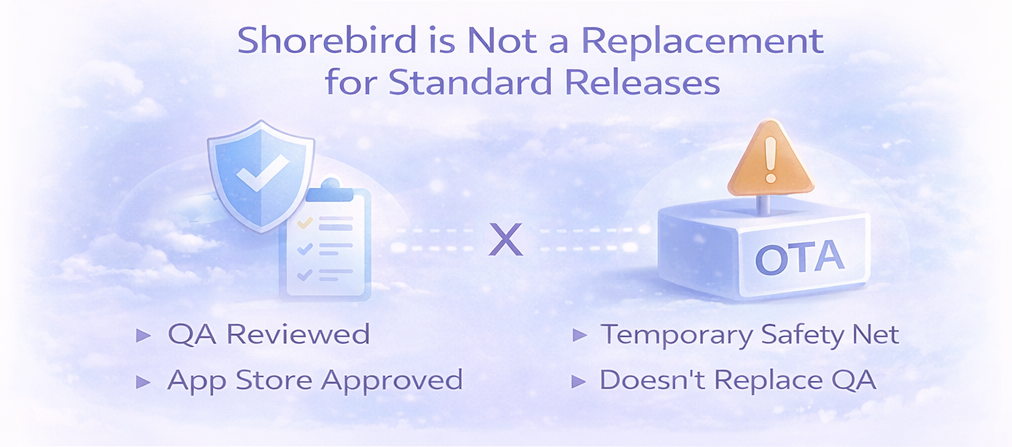
- Not for critical production bugs – always use standard release
- Does not bypass QA – still requires review
- Temporary safety net only
Think of Shorebird as a support layer, not a shortcut.
Final Thoughts
Shorebird can absolutely save your skin in certain situations.
It gives you an additional layer of control, faster reaction time, and flexibility.
- Iterate faster
- Reduce full releases
- React to edge cases
Used poorly, it can:
- Weaken discipline
- Hide issues
- Create inconsistency
The difference is not in the tool – it’s in how you use it.
A strong release process should always be your foundation.